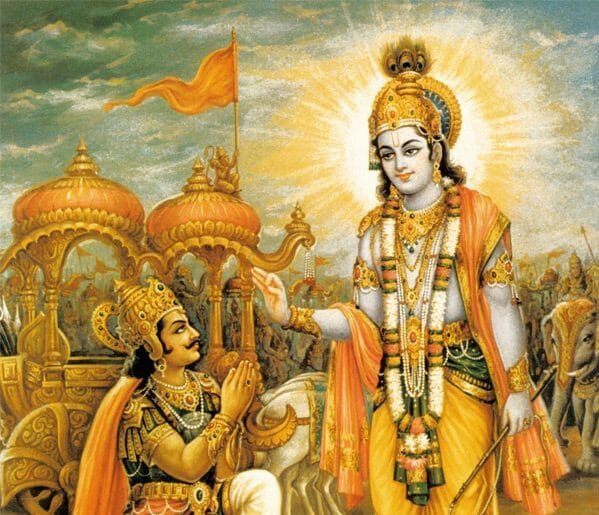
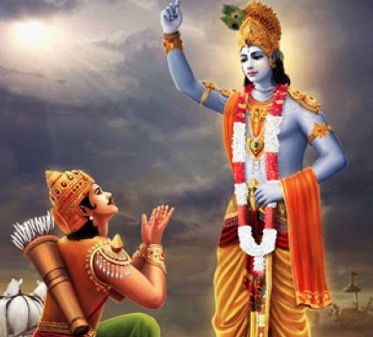
ஶ்ரீமத்³ப⁴க³வத்³கீ³தா is a jewel embedded in the மஹாபா⁴ரத: a dialogue between ஶ்ரீக்ருஷ்ண and அர்ஜுன on the battlefield of குருக்ஷேத்ர. It speaks in the language of real life - duty and doubt, anger and empathy, ambition and fear - and then shows how to meet those forces with steadiness.
Chapter 1, அர்ஜுனவிஷாத³யோக:³, is therefore not "only introduction." It shows the battlefield outside and the battlefield within: Duryodhana's insecurity, the roar of conches, and finally Arjuna's trembling body and wavering mind. By naming these states openly - விஷாத³ (despondency), க்ருபா (compassion), and the fear of wrongdoing - the text prepares you for Krishna's medicine in the chapters ahead.
Read this chapter as the doorway into a long inner apprenticeship. The "previous" story is the Mahabharata build-up itself: years of injustice, failed diplomacy, and the moment when avoidance is no longer possible. From this crisis, the Gita unfolds in three broad movements. Chapters 1-6 emphasize கர்ம-யோக³ and the foundations of right action, while repeatedly returning to the imperishable ஆத்மா so that doing your duty does not become an ego-war.
ஓம் ஶ்ரீ பரமாத்மனே நம:
அத² ப்ரத²மோத்⁴யாய: ।
அர்ஜுனவிஷாத³யோக:³
Translation (பா⁴வார்த²):
Om. Salutations to the Supreme Self. Now begins the first chapter, called "Arjuna's Despondency Yoga".
த்⁴ருதராஷ்ட்ர உவாச
த⁴ர்மக்ஷேத்ரே குருக்ஷேத்ரே ஸமவேதா யுயுத்ஸவ: ।
மாமகா: பாண்ட³வாஶ்சைவ கிமகுர்வத ஸஞ்ஜய ॥ 1 ॥
Translation (பா⁴வார்த²):
Dhritarashtra said: O Sanjaya, when my side and the Pandavas assembled at Kurukshetra, the sacred field of dharma, eager to fight, what did they do?
ஸஞ்ஜய உவாச
த்³ருஷ்ட்வா து பாண்ட³வானீகம் வ்யூட⁴ம் து³ர்யோத⁴னஸ்ததா³ ।
ஆசார்யமுபஸங்க³ம்ய ராஜா வசனமப்³ரவீத் ॥ 2 ॥
Translation (பா⁴வார்த²):
Sanjaya said: Seeing the Pandava army arranged in formation, Duryodhana then approached his teacher and spoke.
பஶ்யைதாம் பாண்டு³புத்ராணாமாசார்ய மஹதீம் சமூம் ।
வ்யூடா⁴ம் த்³ருபத³புத்ரேண தவ ஶிஷ்யேண தீ⁴மதா ॥ 3 ॥
Translation (பா⁴வார்த²):
O teacher, look at this great army of the Pandavas, arranged skillfully by Drupada's son - your capable disciple.
அத்ர ஶூரா மஹேஷ்வாஸா பீ⁴மார்ஜுனஸமா யுதி⁴ ।
யுயுதா⁴னோ விராடஶ்ச த்³ருபத³ஶ்ச மஹாரத:² ॥ 4 ॥
Translation (பா⁴வார்த²):
Here are heroic, mighty bowmen, equal to Bhima and Arjuna in battle - Yuyudhana, Virata, and the great chariot-warrior Drupada.
த்⁴ருஷ்டகேதுஶ்சேகிதான: காஶிராஜஶ்ச வீர்யவான் ।
புருஜித்குந்திபோ⁴ஜஶ்ச ஶைப்³யஶ்ச நரபுங்க³வ: ॥ 5 ॥
Translation (பா⁴வார்த²):
Also here are valiant heroes: Dhrishtaketu, Cekitana, the king of Kashi, Purujit, Kuntibhoja, and Saibya - outstanding among men.
யுதா⁴மன்யுஶ்ச விக்ராந்த உத்தமௌஜாஶ்ச வீர்யவான் ।
ஸௌப⁴த்³ரோ த்³ரௌபதே³யாஶ்ச ஸர்வ ஏவ மஹாரதா²: ॥ 6 ॥
Translation (பா⁴வார்த²):
There are also mighty warriors - Yudhamanyu and the valiant Uttamauja, and also Saubhadra (Abhimanyu) and the sons of Draupadi; all of them are great chariot-fighters.
அஸ்மாகம் து விஶிஷ்டா யே தான்னிபோ³த⁴ த்³விஜோத்தம ।
நாயகா மம ஸைன்யஸ்ய ஸஞ்ஜ்ஞார்த²ம் தான்ப்³ரவீமி தே ॥ 7 ॥
Translation (பா⁴வார்த²):
And now, O best among the twice-born, note the distinguished leaders on our side. For your awareness I will tell you the commanders of my army.
ப⁴வான்பீ⁴ஷ்மஶ்ச கர்ணஶ்ச க்ருபஶ்ச ஸமிதிஞ்ஜய: ।
அஶ்வத்தா²மா விகர்ணஶ்ச ஸௌமத³த்திஸ்ததை²வ ச ॥ 8 ॥
Translation (பா⁴வார்த²):
You, Bhishma, Karna, Kripa the battle-conqueror, Ashvatthama, Vikarna, and also the son of Somadatta - these are the leading champions on our side.
அன்யே ச ப³ஹவ: ஶூரா மத³ர்தே² த்யக்தஜீவிதா: ।
நானாஶஸ்த்ரப்ரஹரணா: ஸர்வே யுத்³த⁴விஶாரதா³: ॥ 9 ॥
Translation (பா⁴வார்த²):
And there are many other heroes too, ready to risk their lives for my sake, equipped with many weapons and skilled in war.
அபர்யாப்தம் தத³ஸ்மாகம் ப³லம் பீ⁴ஷ்மாபி⁴ரக்ஷிதம் ।
பர்யாப்தம் த்வித³மேதேஷாம் ப³லம் பீ⁴மாபி⁴ரக்ஷிதம் ॥ 1௦ ॥
Translation (பா⁴வார்த²):
Our army, guarded by Bhishma, is vast; but their army, guarded by Bhima, is well-contained and sufficient.
அயனேஷு ச ஸர்வேஷு யதா²பா⁴க³மவஸ்தி²தா: ।
பீ⁴ஷ்மமேவாபி⁴ரக்ஷந்து ப⁴வந்த: ஸர்வ ஏவ ஹி ॥ 11 ॥
Translation (பா⁴வார்த²):
Therefore, stationed in all strategic positions according to your roles, all of you must support Bhishma.
தஸ்ய ஸஞ்ஜனயன்ஹர்ஷம் குருவ்ருத்³த:⁴ பிதாமஹ: ।
ஸிம்ஹனாத³ம் வினத்³யோச்சை: ஶங்க³ம் த³த்⁴மௌ ப்ரதாபவான் ॥ 12 ॥
Translation (பா⁴வார்த²):
To raise his spirits, the grandsire Bhishma - elder of the Kurus - roared like a lion and loudly blew his conch.
தத: ஶங்கா³ஶ்ச பே⁴ர்யஶ்ச பணவானககோ³முகா²: ।
ஸஹஸைவாப்⁴யஹன்யந்த ஸ ஶப்³த³ஸ்துமுலோப⁴வத் ॥ 13 ॥
Translation (பா⁴வார்த²):
Then conches, kettledrums, drums, and horns were sounded all at once, and the sound became a tremendous uproar.
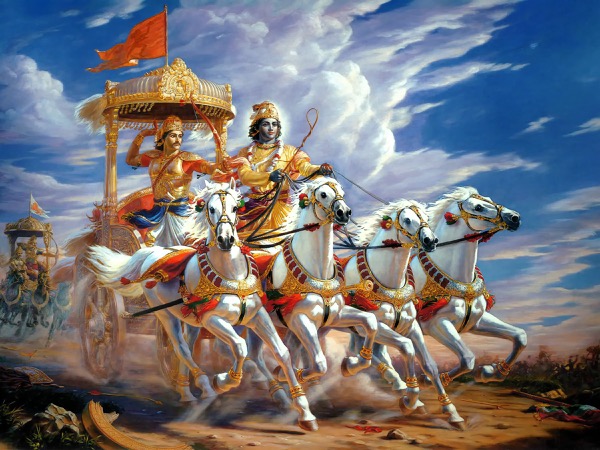
தத: ஶ்வேதைர்ஹயைர்யுக்தே மஹதி ஸ்யந்த³னே ஸ்தி²தௌ ।
மாத⁴வ: பாண்ட³வஶ்சைவ தி³வ்யௌ ஶங்கௌ³ ப்ரத³க்⁴மது: ॥ 14 ॥
Translation (பா⁴வார்த²):
Then Madhava and the Pandava, stationed in their great chariot yoked to white horses, blew their divine conches.
பாஞ்சஜன்யம் ஹ்ருஷீகேஶோ தே³வத³த்தம் த⁴னஞ்ஜய: ।
பௌண்ட்³ரம் த³த்⁴மௌ மஹாஶங்க³ம் பீ⁴மகர்மா வ்ருகோத³ர: ॥ 15 ॥
Translation (பா⁴வார்த²):
Hrishikesha blew Panchajanya; Dhananjaya blew Devadatta; and Bhima - Vrukodara of mighty deeds - blew the great conch Paundra.
அனந்தவிஜயம் ராஜா குந்தீபுத்ரோ யுதி⁴ஷ்டி²ர: ।
நகுல: ஸஹதே³வஶ்ச ஸுகோ⁴ஷமணிபுஷ்பகௌ ॥ 16 ॥
Translation (பா⁴வார்த²):
King Yudhishthira, son of Kunti, blew Anantavijaya; and Nakula and Sahadeva blew Sughosha and Manipushpaka.
காஶ்யஶ்ச பரமேஷ்வாஸ: ஶிக²ண்டீ³ ச மஹாரத:² ।
த்⁴ருஷ்டத்³யும்னோ விராடஶ்ச ஸாத்யகிஶ்சாபராஜித: ॥ 17 ॥
Translation (பா⁴வார்த²):
The king of Kashi, the great archer; Shikhandi, the great chariot-warrior; Dhrishtadyumna, Virata, and the undefeated Satyaki were among those who sounded their conches.
த்³ருபதோ³ த்³ரௌபதே³யாஶ்ச ஸர்வஶ: ப்ருதி²வீபதே ।
ஸௌப⁴த்³ரஶ்ச மஹாபா³ஹு: ஶங்கா³ந்த³த்⁴மு: ப்ருத²க்ப்ருத²க் ॥ 18 ॥
Translation (பா⁴வார்த²):
O king, Drupada, all the sons of Draupadi, and the mighty-armed Saubhadra blew their conches - each one separately.
ஸ கோ⁴ஷோ தா⁴ர்தராஷ்ட்ராணாம் ஹ்ருத³யானி வ்யதா³ரயத் ।
நப⁴ஶ்ச ப்ருதி²வீம் சைவ துமுலோ வ்யனுனாத³யன் ॥ 19 ॥
Translation (பா⁴வார்த²):
That tumultuous sound tore the hearts of Dhritarashtra's sons and echoed through the sky and the earth.
அத² வ்யவஸ்தி²தாந்த்³ருஷ்ட்வா தா⁴ர்தராஷ்ட்ரான்கபித்⁴வஜ: ।
ப்ரவ்ருத்தே ஶஸ்த்ரஸம்பாதே த⁴னுருத்³யம்ய பாண்ட³வ: ॥ 2௦ ॥
Translation (பா⁴வார்த²):
Then, seeing the sons of Dhritarashtra drawn up for battle, and as the clash of weapons was about to begin, Arjuna - the Pandava with the monkey-banner - raised his bow.
ஹ்ருஷீகேஶம் ததா³ வாக்யமித³மாஹ மஹீபதே।
அர்ஜுன உவாச
ஸேனயோருப⁴யோர்மத்⁴யே ரத²ம் ஸ்தா²பய மேச்யுத ॥ 21 ॥
Translation (பா⁴வார்த²):
Arjuna said to Hrishikesha: O Achyuta, place my chariot between the two armies.
யாவதே³தான்னிரீக்ஷேஹம் யோத்³து⁴காமானவஸ்தி²தான் ।
கைர்மயா ஸஹ யோத்³த⁴வ்யமஸ்மின்ரணஸமுத்³யமே ॥ 22 ॥
Translation (பா⁴வார்த²):
Let me look at those who are standing here eager to fight, with whom I must engage in this battle.
யோத்ஸ்யமானானவேக்ஷேஹம் ய ஏதேத்ர ஸமாக³தா: ।
தா⁴ர்தராஷ்ட்ரஸ்ய து³ர்பு³த்³தே⁴ர்யுத்³தே⁴ ப்ரியசிகீர்ஷவ: ॥ 23 ॥
Translation (பா⁴வார்த²):
I want to see those who have gathered here ready to fight, seeking to please the evil-minded son of Dhritarashtra in this war.
ஸஞ்ஜய உவாச
ஏவமுக்தோ ஹ்ருஷீகேஶோ கு³டா³கேஶேன பா⁴ரத ।
ஸேனயோருப⁴யோர்மத்⁴யே ஸ்தா²பயித்வா ரதோ²த்தமம் ॥ 24 ॥
Translation (பா⁴வார்த²):
Sanjaya said: Thus addressed by Gudakesha, O Bharata, Hrishikesha placed the best of chariots between the two armies.
பீ⁴ஷ்மத்³ரோணப்ரமுக²த: ஸர்வேஷாம் ச மஹீக்ஷிதாம் ।
உவாச பார்த² பஶ்யைதான்ஸமவேதான்குரூனிதி ॥ 25 ॥
Translation (பா⁴வார்த²):
With Bhishma and Drona in the forefront, and in the presence of all the kings, Krishna said: O Partha, behold these Kurus assembled here.
தத்ராபஶ்யத்ஸ்தி²தான்பார்த:² பித்ரூனத² பிதாமஹான் ।
ஆசார்யான்மாதுலான்ப்⁴ராத்ரூன்புத்ரான்பௌத்ரான்ஸகீ²ம்ஸ்ததா² ॥ 26 ॥
Translation (பா⁴வார்த²):
There Partha saw standing fathers and grandfathers, teachers and uncles, brothers, sons, grandsons, and friends.
ஶ்வஶுரான்ஸுஹ்ருத³ஶ்சைவ ஸேனயோருப⁴யோரபி ।
தான்ஸமீக்ஷ்ய ஸ கௌந்தேய: ஸர்வான்ப³ந்தூ⁴னவஸ்தி²தான் ॥ 27 ॥
Translation (பா⁴வார்த²):
He also saw fathers-in-law and well-wishers in both armies; seeing all those relatives standing there, the son of Kunti (Arjuna)...
க்ருபயா பரயாவிஷ்டோ விஷீத³ன்னித³மப்³ரவீத்।
அர்ஜுன உவாச
த்³ருஷ்ட்வேமம் ஸ்வஜனம் க்ருஷ்ண யுயுத்ஸும் ஸமுபஸ்தி²தம் ॥ 28 ॥
Translation (பா⁴வார்த²):
Overwhelmed by deep compassion and grief, Arjuna said: O Krishna, seeing my own people standing here eager to fight...
ஸீத³ந்தி மம கா³த்ராணி முக²ம் ச பரிஶுஷ்யதி ।
வேபது²ஶ்ச ஶரீரே மே ரோமஹர்ஷஶ்ச ஜாயதே ॥ 29 ॥
Translation (பா⁴வார்த²):
My limbs grow weak, my mouth dries up, my body trembles, and my hair stands on end.
கா³ண்டீ³வம் ஸ்ரம்ஸதே ஹஸ்தாத்த்வக்சைவ பரித³ஹ்யதே ।
ந ச ஶக்னோம்யவஸ்தா²தும் ப்⁴ரமதீவ ச மே மன: ॥ 3௦ ॥
Translation (பா⁴வார்த²):
My Gandiva slips from my hand, my skin burns, I cannot stand steady, and my mind seems to reel.
நிமித்தானி ச பஶ்யாமி விபரீதானி கேஶவ ।
ந ச ஶ்ரேயோனுபஶ்யாமி ஹத்வா ஸ்வஜனமாஹவே ॥ 31 ॥
Translation (பா⁴வார்த²):
I see adverse signs, O Keshava, and I do not foresee any good in killing my own people in battle.
ந காங்க்ஷே விஜயம் க்ருஷ்ண ந ச ராஜ்யம் ஸுகா²னி ச ।
கிம் நோ ராஜ்யேன கோ³விந்த³ கிம் போ⁴கை³ர்ஜீவிதேன வா ॥ 32 ॥
Translation (பா⁴வார்த²):
O Krishna, I do not want victory, kingdom, or pleasures. What use are kingdom, enjoyments, or even life to us, O Govinda?
யேஷாமர்தே² காங்க்ஷிதம் நோ ராஜ்யம் போ⁴கா³: ஸுகா²னி ச ।
த இமேவஸ்தி²தா யுத்³தே⁴ ப்ராணாம்ஸ்த்யக்த்வா த⁴னானி ச ॥ 33 ॥
Translation (பா⁴வார்த²):
Those for whose sake we wanted kingdom, pleasures, and comforts are standing here in battle, ready to give up their lives and wealth.
ஆசார்யா: பிதர: புத்ராஸ்ததை²வ ச பிதாமஹா: ।
மாதுலா: ஶ்வஶுரா: பௌத்ரா: ஶ்யாலா: ஸம்ப³ந்தி⁴னஸ்ததா² ॥ 34 ॥
Translation (பா⁴வார்த²):
Teachers, fathers, sons, grandfathers, uncles, fathers-in-law, grandsons, brothers-in-law, and other relatives are all here.
ஏதான்ன ஹந்துமிச்சா²மி க்⁴னதோபி மது⁴ஸூத³ன ।
அபி த்ரைலோக்யராஜ்யஸ்ய ஹேதோ: கிம் நு மஹீக்ருதே ॥ 35 ॥
Translation (பா⁴வார்த²):
O Madhusudana, I do not wish to kill these people even if they kill me - not even for sovereignty over the three worlds, much less for the sake of this earth.
நிஹத்ய தா⁴ர்தராஷ்ட்ரான்ன: கா ப்ரீதி: ஸ்யாஜ்ஜனார்த³ன ।
பாபமேவாஶ்ரயேத³ஸ்மான்ஹத்வைதானாததாயின: ॥ 36 ॥
Translation (பா⁴வார்த²):
O Janardana, what joy would be ours if we kill the sons of Dhritarashtra? Sin would cling to us by killing these aggressors.
தஸ்மான்னார்ஹா வயம் ஹந்தும் தா⁴ர்தராஷ்ட்ரான்ஸ்வபா³ந்த⁴வான் ।
ஸ்வஜனம் ஹி கத²ம் ஹத்வா ஸுகி²ன: ஸ்யாம மாத⁴வ ॥ 37 ॥
Translation (பா⁴வார்த²):
Therefore we are not fit to kill the sons of Dhritarashtra, our own kinsmen. O Madhava, how could we be happy after killing our own people?
யத்³யப்யேதே ந பஶ்யந்தி லோபோ⁴பஹதசேதஸ: ।
குலக்ஷயக்ருதம் தோ³ஷம் மித்ரத்³ரோஹே ச பாதகம் ॥ 38 ॥
Translation (பா⁴வார்த²):
Even though these people, their minds ruined by greed, do not see the evil in destroying the family or the sin in betraying friends...
கத²ம் ந ஜ்ஞேயமஸ்மாபி⁴: பாபாத³ஸ்மான்னிவர்திதும் ।
குலக்ஷயக்ருதம் தோ³ஷம் ப்ரபஶ்யத்³பி⁴ர்ஜனார்த³ன ॥ 39 ॥
Translation (பா⁴வார்த²):
O Janardana, how can we - who see clearly the fault in destroying the family - not know to turn away from this sin?
குலக்ஷயே ப்ரணஶ்யந்தி குலத⁴ர்மா: ஸனாதனா: ।
த⁴ர்மே நஷ்டே குலம் க்ருத்ஸ்னமத⁴ர்மோபி⁴ப⁴வத்யுத ॥ 4௦ ॥
Translation (பா⁴வார்த²):
When a family is destroyed, its ancient duties and traditions perish; when dharma is lost, adharma overwhelms the entire family.
அத⁴ர்மாபி⁴ப⁴வாத்க்ருஷ்ண ப்ரது³ஷ்யந்தி குலஸ்த்ரிய: ।
ஸ்த்ரீஷு து³ஷ்டாஸு வார்ஷ்ணேய ஜாயதே வர்ணஸங்கர: ॥ 41 ॥
Translation (பா⁴வார்த²):
O Krishna, when adharma prevails, the women of the family are corrupted; and when women are corrupted, O Varshneya, social confusion (வர்ணஸங்கர:) arises.
ஸங்கரோ நரகாயைவ குலக்⁴னானாம் குலஸ்ய ச ।
பதந்தி பிதரோ ஹ்யேஷாம் லுப்தபிண்டோ³த³கக்ரியா: ॥ 42 ॥
Translation (பா⁴வார்த²):
Such disorder leads to downfall for the family-destroyers and the family; their ancestors fall, deprived of the rites of offerings of பிண்ட³ and உதக³.
தோ³ஷைரேதை: குலக்⁴னானாம் வர்ணஸங்கரகாரகை: ।
உத்ஸாத்³யந்தே ஜாதித⁴ர்மா: குலத⁴ர்மாஶ்ச ஶாஶ்வதா: ॥ 43 ॥
Translation (பா⁴வார்த²):
By these faults of family-destroyers who create social confusion, the long-standing duties of community and family are uprooted.
உத்ஸன்னகுலத⁴ர்மாணாம் மனுஷ்யாணாம் ஜனார்த³ன ।
நரகேனியதம் வாஸோ ப⁴வதீத்யனுஶுஶ்ரும ॥ 44 ॥
Translation (பா⁴வார்த²):
O Janardana, we have heard that people whose family dharmas are destroyed dwell in downfall (naraka) inevitably.
அஹோ ப³த மஹத்பாபம் கர்தும் வ்யவஸிதா வயம் ।
யத்³ராஜ்யஸுக²லோபே⁴ன ஹந்தும் ஸ்வஜனமுத்³யதா: ॥ 45 ॥
Translation (பா⁴வார்த²):
Alas, we are resolved to commit a great wrong - driven by greed for kingdom and pleasures, we are ready to kill our own people.
யதி³ மாமப்ரதீகாரமஶஸ்த்ரம் ஶஸ்த்ரபாணய: ।
தா⁴ர்தராஷ்ட்ரா ரணே ஹன்யுஸ்தன்மே க்ஷேமதரம் ப⁴வேத் ॥ 46 ॥
Translation (பா⁴வார்த²):
If the sons of Dhritarashtra, weapons in hand, were to kill me in battle while I stand unarmed and unresisting, that would be better for me.
ஸஞ்ஜய உவாச ।
ஏவமுக்த்வார்ஜுன: ஸங்க்³யே ரதோ²பஸ்த² உபாவிஶத் ।
விஸ்ருஜ்ய ஸஶரம் சாபம் ஶோகஸம்விக்³னமானஸ: ॥ 47 ॥
Translation (பா⁴வார்த²):
Sanjaya said: Having spoken thus on the battlefield, Arjuna sat down on the seat of the chariot, casting aside his bow and arrows, his mind overwhelmed with grief.
ஓம் தத்ஸதி³தி ஶ்ரீமத்³ப⁴க³வத்³கீ³தாஸூபனிஷத்ஸு ப்³ரஹ்மவித்³யாயாம் யோக³ஶாஸ்த்ரே
ஶ்ரீக்ருஷ்ணார்ஜுனஸம்வாதே³ அர்ஜுனவிஷாத³யோகோ³ நாம ப்ரத²மோத்⁴யாய: ॥1 ॥
Translation (பா⁴வார்த²):
Om Tat Sat. Thus ends the first chapter, called "Arjuna Vishada Yoga", in the revered Bhagavad Gita - an Upanishad teaching Brahma-vidya and Yoga, in the dialogue between Sri Krishna and Arjuna.
Browse Related Categories: