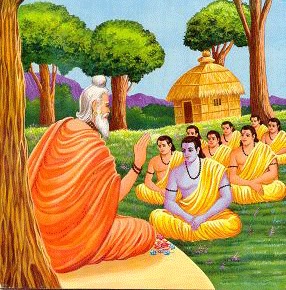
প্রশ্নোপনিষদ্ belongs to the Atharva Veda and is arranged as six questions asked by disciplined students to the sage Pippalada. The first question asks about the origin of beings and receives a teaching on Prajapati, prana and rayi, the year, the sun, the moon, food, and disciplined household life.
The Upanishad's method is important: the students do not demand instant answers. Pippalada asks them to live with তপস্, ব্রহ্মচর্য়, and শ্রদ্ধা for a year, showing that subtle knowledge requires preparation. The first question then explains creation as the interplay of life-force and matter, energy and form.
প্রথমঃ প্রশ্নঃ
Translation (ভাবার্থ):
This title announces the first question of the Prashna Upanishad.
ওং নমঃ পরমাত্মনে । হরিঃ ওম্ ॥
Translation (ভাবার্থ):
The recitation opens with salutations to the supreme Self and the invocation of Hari and Om.
সুকেশা চ ভারদ্বাজঃ শৈব্যশ্চ সত্যকামঃ সৌর্য়াযণী চ গার্গ্য়ঃ কৌসল্যশ্চাশ্বলাযনো ভার্গবো বৈদর্ভিঃ কবংধী কাত্য়াযনস্তে হৈতে ব্রহ্মপরা ব্রহ্মনিষ্ঠাঃ পরং ব্রহ্মান্বেষমাণাঃ এষ হ বৈ তত্সর্বং বক্ষ্যতীতি তে হ সমিত্পাণয়ো ভগবংতং পিপ্পলাদমুপসন্নাঃ ॥1॥
Translation (ভাবার্থ):
Six seekers approach Pippalada with fuel in hand, dedicated to Brahman and seeking knowledge of the supreme reality.
তান্ হ স ঋষিরুবাচ ভূয় এব তপসা ব্রহ্মচর্য়েণ শ্রদ্ধয়া সংবত্সরং সংবত্স্যথ যথাকামং প্রশ্নান্ পৃচ্ছত যদি বিজ্ঞাস্য়ামঃ সর্বং হ বো বক্ষাম ইতি ॥2॥
Translation (ভাবার্থ):
Pippalada asks them to live for a year with austerity, celibacy, and faith before asking their questions.
অথ কবংধী কাত্য়াযন উপেত্য় পপ্রচ্ছ ভগবন্ কুতো হ বা ইমাঃ প্রজাঃ প্রজায়ংত ইতি ॥3॥
Translation (ভাবার্থ):
Kabandhi asks from where all beings are born.
তস্মৈ স হোবাচ-
প্রজাকামো বৈ প্রজাপতিঃ স তপোঽতপ্যত স তপস্তপ্ত্বা স মিথুনমুত্পাদযতে।
রয়িং চ প্রাণংচেতি এতৌ মে বহুধা প্রজাঃ করিষ্যত ইতি ॥4॥
Translation (ভাবার্থ):
Pippalada answers that Prajapati desired progeny and created prana and rayi, expecting them to produce beings.
আদিত্য়ো হ বৈ প্রাণো রয়িরেব চংদ্রমাঃ রয়ির্বা এতত্ সর্বং যন্মূর্তং চামূর্তং চ তস্মান্মূর্তিরেব রয়িঃ ॥5॥
Translation (ভাবার্থ):
The sun is prana and the moon is rayi; all formed and formless existence is included in rayi as the field of manifestation.
অথাদিত্য় উদযন্ যত্ প্রাচীং দিশং প্রবিশতি তেন প্রাচ্য়ান্ প্রাণান্ রশ্মিষু সন্নিধত্তে।
যদ্দক্ষিণাং যত্ প্রতীচীং যদুদীচীং যদধো যদূর্ধ্বং যদংতরা দিশো যত্সর্বং প্রকাশযতি তেন সর্বান্ প্রাণান্ রশ্মিষু সন্নিধত্তে ॥6॥
Translation (ভাবার্থ):
The rising sun enters the directions with its rays and gathers life into itself.
স এষ বৈশ্বানরো বিশ্বরুপঃ প্রাণোঽগ্নিরুদযতে।
তদেতদ্ ঋচাঽভ্য়ুক্তম্ ॥7॥
Translation (ভাবার্থ):
The sun is described as the all-formed Vaishvanara, the cosmic fire and prana rising for beings.
বিশ্বরূপং হরিণং জাতবেদসং পরাযণং জ্য়োতিরেকং তপংতম্।
সহস্ররশ্মিঃ শতধা বর্তমানঃ প্রাণঃ প্রজানামুদযত্য়েষ সূর্য়ঃ ॥8॥
Translation (ভাবার্থ):
The solar prana is praised as the many-rayed, all-seeing, single light and refuge of beings.
সংবত্সরো বৈ প্রজাপতিঃ স্তস্য়াযনে দক্ষিণংচোত্তরং চ।
তদ্য়ে হ বৈ তদিষ্টাপূর্তে কৃতমিত্য়ুপাসতে তে চাংদ্রমসমেব লোকমভিজয়ংতে ত এব পুনরাবর্তংতে।
তস্মাদেত ঋষয়ঃ প্রজাকামা দক্ষিণং প্রতিপদ্য়ংতে। এষ হ বৈ রয়ির্য়ঃ পিতৃয়াণঃ ॥9॥
Translation (ভাবার্থ):
The year is Prajapati, with southern and northern paths corresponding to ritual-merit and knowledge-directed life.
অথোত্তরেণ তপসা ব্রহ্মচর্য়েণ শ্রদ্ধয়া বিদ্যয়াত্মানমন্বিষ্য়াদিত্যমভিজয়ংতে।
এতদ্বৈ প্রাণানামাযতনমেতদমৃতমভযমেতত্ পরাযণমেতস্মান্ন পুনরাবর্তংত ইত্য়েষ নিরোধঃ। তদেষ শ্লোকঃ ॥10॥
Translation (ভাবার্থ):
Those who pursue austerity, celibacy, faith, and knowledge through the northern path reach the sun, the fearless support from which there is no return.
পংচপাদং পিতরং দ্বাদশাকৃতিং দিব আহুঃ পরে অর্ধে পুরীষিণম্।
অথেমে অন্য় উ পরে বিচক্ষণং সপ্তচক্রে ষডর আহুরর্পিতমিতি ॥11॥
Translation (ভাবার্থ):
The sun is praised as having five feet, twelve forms, seven wheels, and six spokes, the father and giver of rain.
মাসো বৈ প্রজাপতিস্তস্য় কৃষ্ণপক্শ এব রয়িঃ শুক্লঃ প্রণস্তস্মাদেত ঋষয়ঃ শুক্ল ইষ্টং কুর্বংতীতর ইতরস্মিন্ ॥12॥
Translation (ভাবার্থ):
The month is Prajapati: the dark half is rayi and the bright half is prana, and ritual action follows this distinction.
অহোরাত্রো বৈ প্রজাপতিস্তস্য়াহরেব প্রাণো রাত্রিরেব রয়িঃ।
প্রাণং বা এতে প্রস্কংদংতি যে দিবা রত্য়া সংয়ুজ্য়ংতে ব্রহ্মচর্যমেব তদ্যদ্রাত্রৌ রত্য়া সংয়ুজ্য়ংতে ॥13॥
Translation (ভাবার্থ):
Day and night are Prajapati; day is prana and night is rayi, so conduct and union must be governed by sacred order.
অন্নং বৈ প্রজাপতিস্ততো হ বৈ তদ্রেতস্তস্মাদিমাঃ প্রজাঃ প্রজায়ংত ইতি ॥14॥
Translation (ভাবার্থ):
Food is Prajapati; from food comes seed and from seed beings are born.
তদ্য়ে হ বৈ তত্প্রজাপতিব্রতং চরংতি তে মিথুনমুত্পাদয়ংতে।
তেষামেবৈষ ব্রহ্মলোকো যেষাং তপো ব্রহ্মচর্য়ং যেষু সত্য়ং প্রতিষ্ঠিতম্ ॥15॥
Translation (ভাবার্থ):
Those who keep Prajapati's vow produce offspring, and the Brahma-world belongs to those in whom austerity, celibacy, and truth are established.
তেষামসৌ বিরজো ব্রহ্মলোকো ন যেষু জিহ্মমনৃতং ন মায়া চেতি ॥16॥
Translation (ভাবার্থ):
The pure Brahma-world belongs to those without crookedness, falsehood, or deceit.
Browse Related Categories:
 বেদ মংত্রাঃ (111)
- গণপতি প্রার্থন ঘনপাঠঃ
- গাযত্রী মংত্রং ঘনপাঠঃ
- শ্রী রুদ্রং লঘুন্য়াসম্
- শ্রী রুদ্রং নমকম্
- শ্রী রুদ্রং - চমকপ্রশ্নঃ
- পুরুষ সূক্তম্
- শ্রী সূক্তম্
- দুর্গা সূক্তম্
- নারাযণ সূক্তম্
- মংত্র পুষ্পম্
- শাংতি মংত্রম্ (দশ শাংতয়ঃ)
- নিত্য় সংধ্য়া বংদনম্ (কৃষ্ণ যজুর্বেদীয়)
- শ্রী গণপতি অথর্ব ষীর্ষম্ (গণপত্যথর্বষীর্ষোপনিষত্)
- ঈশাবাস্য়োপনিষদ্ (ঈশোপনিষদ্)
- নক্ষত্র সূক্তম্ (নক্ষত্রেষ্টি)
- মন্য়ু সূক্তম্
- মেধা সূক্তম্
- বিষ্ণু সূক্তম্
- শিব পংচামৃত স্নানাভিষেকম্
- যজ্ঞোপবীত ধারণ
- সর্ব দেবতা গাযত্রী মংত্রাঃ
- তৈত্তিরীয় উপনিষদ্ - শীক্ষাবল্লী
- তৈত্তিরীয় উপনিষদ্ - আনংদবল্লী
- তৈত্তিরীয় উপনিষদ্ - ভৃগুবল্লী
- ভূ সূক্তম্
- নবগ্রহ সূক্তম্
- মহানারাযণ উপনিষদ্
- অরুণপ্রশ্নঃ
- শ্রী মহান্য়াসম্ (পূর্ণং)
- সরস্বতী সূক্তম্ (ঋগ্বেদ)
- ভাগ্য় সূক্তম্
- পবমান সূক্তম্
- নাসদীয় সূক্তম্
- নবগ্রহ সূক্তম্ (নবগ্রহ নমস্কারম্)
- পিতৃ সূক্তম্
- রাত্রি সূক্তম্
- সর্প সূক্তম্
- হিরণ্য় গর্ভ সূক্তম্
- সানুস্বার প্রশ্ন (সুন্নাল পন্নম্)
- গো সূক্তম্
- ত্রিসুপর্ণম্
- চিত্তি পন্নম্
- অঘমর্ষণ সূক্তম্
- কেন উপনিষদ্ - প্রথমঃ খংডঃ
- কেন উপনিষদ্ - দ্বিতীয়ঃ খংডঃ
- কেন উপনিষদ্ - তৃতীয়ঃ খংডঃ
- কেন উপনিষদ্ - চতুর্থঃ খংডঃ
- মুংডক উপনিষদ্ - প্রথম মুংডক, প্রথম কাংডঃ
- মুংডক উপনিষদ্ - প্রথম মুংডক, দ্বিতীয় কাংডঃ
- মুংডক উপনিষদ্ - দ্বিতীয় মুংডক, প্রথম কাংডঃ
- মুংডক উপনিষদ্ - দ্বিতীয় মুংডক, দ্বিতীয় কাংডঃ
- মুংডক উপনিষদ্ - তৃতীয় মুংডক, প্রথম কাংডঃ
- মুংডক উপনিষদ্ - তৃতীয় মুংডক, দ্বিতীয় কাংডঃ
- নারাযণ উপনিষদ্
- বিশ্বকর্ম সূক্তম্
- শ্রী দেব্যথর্বশীর্ষম্
- দুর্বা সূক্তম্ (মহানারাযণ উপনিষদ্)
- মৃত্তিকা সূক্তম্ (মহানারাযণ উপনিষদ্)
- শ্রী দুর্গা অথর্বশীর্ষম্
- অগ্নি সূক্তম্ (ঋগ্বেদ)
- ক্রিমি সংহারক সূক্তম্ (যজুর্বেদ)
- নীলা সূক্তম্
- বেদ আশীর্বচনম্
- বেদ স্বস্তি বাচনম্
- ঐকমত্য় সূক্তম্ (ঋগ্বেদ)
- আয়ুষ্য় সূক্তম্
- শ্রদ্ধা সূক্তম্
- শ্রী গণেশ (গণপতি) সূক্তম্ (ঋগ্বেদ)
- শিবোপাসন মংত্রাঃ
- শাংতি পংচকম্
- শুক্ল যজুর্বেদ সংধ্য়াবংদনম্
- মাংডূক্য় উপনিষদ্
- ঋগ্বেদ সংধ্য়াবংদনম্
- একাত্মতা স্তোত্রম্
- ভাবনোপনিষদ্
- কঠোপনিষদ্ - অধ্য়ায় 1, বল্লী 1
- কঠোপনিষদ্ - অধ্য়ায় 1, বল্লী 2
- কঠোপনিষদ্ - অধ্য়ায় 1, বল্লী 3
- কঠোপনিষদ্ - অধ্য়ায় 2, বল্লী 1
- কঠোপনিষদ্ - অধ্য়ায় 2, বল্লী 2
- কঠোপনিষদ্ - অধ্য়ায় 2, বল্লী 3
- প্রশ্নোপনিষদ্ - প্রথমঃ প্রশ্নঃ
- প্রশ্নোপনিষদ্ - দ্বিতীয়ঃ প্রশ্নঃ
- প্রশ্নোপনিষদ্ - ত্রিতীয়ঃ প্রশ্নঃ
- প্রশ্নোপনিষদ্ - চতুর্থঃ প্রশ্নঃ
- প্রশ্নোপনিষদ্ - পংচ প্রশ্নঃ
- প্রশ্নোপনিষদ্ - ষষ্ঠঃ প্রশ্নঃ
- অন্ন সূক্তম্
- ঋগ্বেদীয় পংচ রুদ্রং
- শ্রী মহান্য়াসম্ - 0. কলশ প্রতিষ্ঠাপন মংত্রাঃ
- শ্রী মহান্য়াসম্ - 1. পংচাংগ রুদ্রন্য়াসঃ
- শ্রী মহান্য়াসম্ - 2. পংচমুখ ধ্য়ানম্
- শ্রী মহান্য়াসম্ - 3. অংগন্য়াসঃ
- শ্রী মহান্য়াসম্ - 4. দশাংগ ন্য়াসঃ
- শ্রী মহান্য়াসম্ - 5. পংচাংগ ন্য়াসঃ
- শ্রী মহান্য়াসম্ - 5.1. হংস গাযত্রী
- শ্রী মহান্য়াসম্ - 5.2. দিক্ সংপুটন্য়াসঃ (সংপুটীকরণম্)
- শ্রী মহান্য়াসম্ - 5.3. দশাংগ রৌদ্রীকরণম্
- শ্রী মহান্য়াসম্ - 5.4. ষোডশাংগ রৌদ্রীকরণং
- শ্রী মহান্য়াসম্ - 6.1. মনো জ্য়োতিঃ
- শ্রী মহান্য়াসম্ - 6.2. আত্মরক্ষা
- শ্রী মহান্য়াসম্ - 7.1. শিবসংকল্পাঃ
- শ্রী মহান্য়াসম্ - 7.2. পুরুষ সূক্তং
- শ্রী মহান্য়াসম্ - 7.3. উত্তর নারাযণং
- শ্রী মহান্য়াসম্ - 7.4. অপ্রতিরথং
- শ্রী মহান্য়াসম্ - 7.5. প্রতি পূরুষং
- শ্রী মহান্য়াসম্ - 7.6. শত রুদ্রীয়ং (ত্বমগ্নে রুদ্রোঽনুবাকঃ)
- শ্রী মহান্য়াসম্ - 7.7. পংচাংগ জপঃ
- শ্রী মহান্য়াসম্ - 7.8. অষ্টাংগ প্রণামঃ
- সরস্বতী সূক্তম্ (যজুর্বেদীয়)
- উদক শাংতি (পুণ্য়াহ বাচনং)
 উপনিষদঃ (34)
- ঈশাবাস্য়োপনিষদ্ (ঈশোপনিষদ্)
- শিবসংকল্পোপনিষত্ (শিব সংকল্পমস্তু)
- তৈত্তিরীয় উপনিষদ্ - শীক্ষাবল্লী
- তৈত্তিরীয় উপনিষদ্ - আনংদবল্লী
- তৈত্তিরীয় উপনিষদ্ - ভৃগুবল্লী
- মহানারাযণ উপনিষদ্
- কেন উপনিষদ্ - প্রথমঃ খংডঃ
- কেন উপনিষদ্ - দ্বিতীয়ঃ খংডঃ
- কেন উপনিষদ্ - তৃতীয়ঃ খংডঃ
- কেন উপনিষদ্ - চতুর্থঃ খংডঃ
- মুংডক উপনিষদ্ - প্রথম মুংডক, প্রথম কাংডঃ
- মুংডক উপনিষদ্ - প্রথম মুংডক, দ্বিতীয় কাংডঃ
- মুংডক উপনিষদ্ - দ্বিতীয় মুংডক, প্রথম কাংডঃ
- মুংডক উপনিষদ্ - দ্বিতীয় মুংডক, দ্বিতীয় কাংডঃ
- মুংডক উপনিষদ্ - তৃতীয় মুংডক, প্রথম কাংডঃ
- মুংডক উপনিষদ্ - তৃতীয় মুংডক, দ্বিতীয় কাংডঃ
- নারাযণ উপনিষদ্
- চাক্ষুষোপনিষদ্ (চক্ষুষ্মতী বিদ্য়া)
- অপরাধ ক্ষমাপণ স্তোত্রম্
- শ্রী সূর্য়োপনিষদ্
- মাংডূক্য় উপনিষদ্
- ভাবনোপনিষদ্
- কঠোপনিষদ্ - অধ্য়ায় 1, বল্লী 1
- কঠোপনিষদ্ - অধ্য়ায় 1, বল্লী 2
- কঠোপনিষদ্ - অধ্য়ায় 1, বল্লী 3
- কঠোপনিষদ্ - অধ্য়ায় 2, বল্লী 1
- কঠোপনিষদ্ - অধ্য়ায় 2, বল্লী 2
- কঠোপনিষদ্ - অধ্য়ায় 2, বল্লী 3
- প্রশ্নোপনিষদ্ - প্রথমঃ প্রশ্নঃ
- প্রশ্নোপনিষদ্ - দ্বিতীয়ঃ প্রশ্নঃ
- প্রশ্নোপনিষদ্ - ত্রিতীয়ঃ প্রশ্নঃ
- প্রশ্নোপনিষদ্ - চতুর্থঃ প্রশ্নঃ
- প্রশ্নোপনিষদ্ - পংচ প্রশ্নঃ
- প্রশ্নোপনিষদ্ - ষষ্ঠঃ প্রশ্নঃ
 প্রশ্নোপনিষদ্ (6)